Wiring a Studio Control Room: How We Approach Equipment Integration
Callum Reid explains how flairuni plans vision mixers, routing, monitoring and intercom as one control room, and what clients can expect from an integration project this autumn.
CR
Callum Reid
6 min read
Why integration is the part clients notice least
When a studio control room works, nobody mentions the wiring. Presenters talk, the director calls shots, and the programme goes out. When it does not work, the faults are rarely in a single expensive box. They sit between devices: a router that was never labelled, a monitor feed with the wrong delay, an intercom channel that nobody can find during a rehearsal.
That is why Studio Equipment Integration is one of the core services we offer at flairuni. I am Callum Reid, the Technical Director, and I look after the signal chain on every project we take on. This note sets out how we handle that work, so that broadcasters, venues and event organisers know what to expect when they ask us to design or rebuild a gallery.
We start from the programme, not the catalogue. A news bulletin, a two-person interview and a festival stage show each place different demands on the room, and the equipment list follows from that.
What the service covers
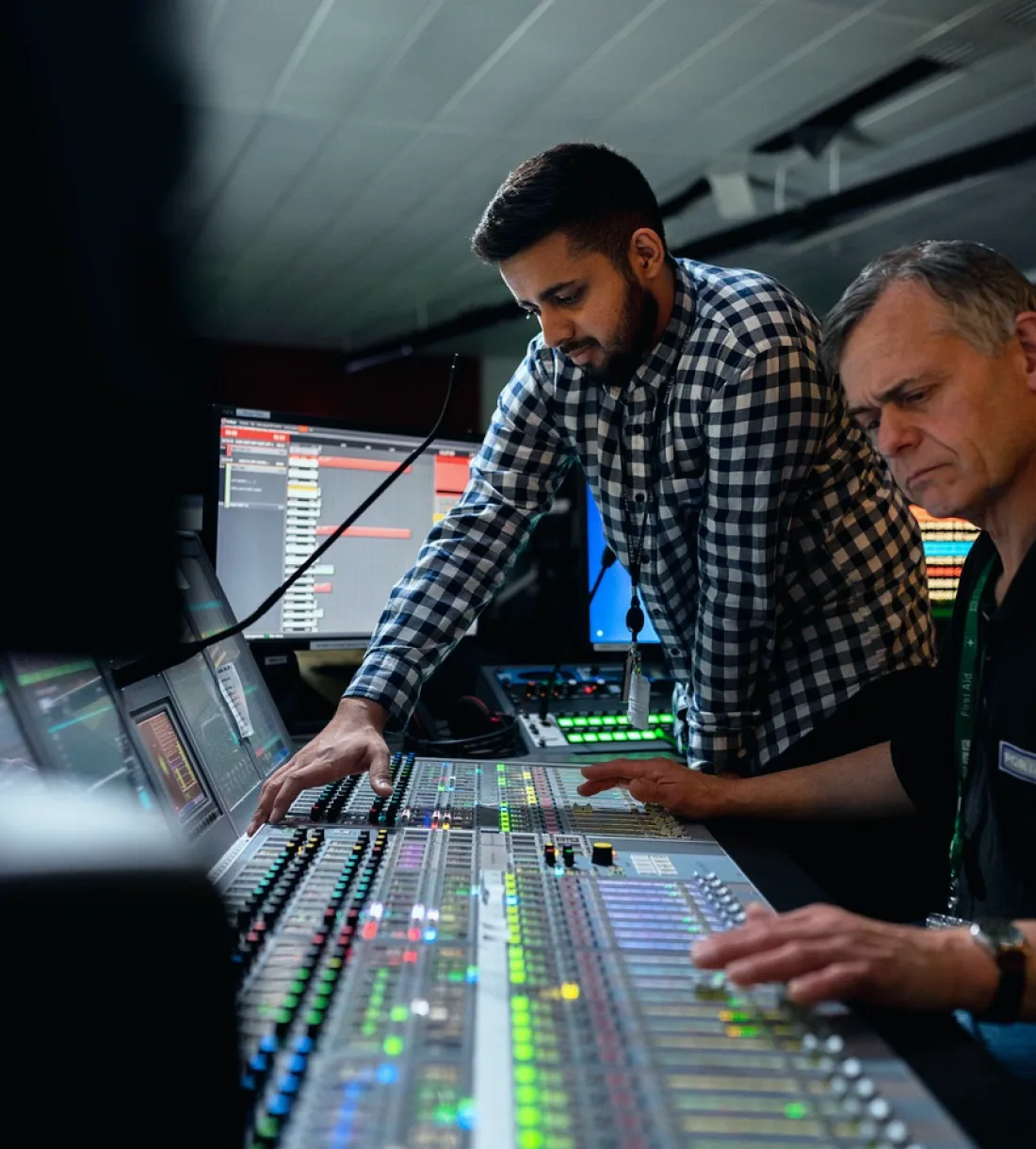
Our integration work brings four things together: the vision mixer, the routing, the monitoring and the intercom. Each is chosen to suit the others, and each is documented so that the people who run the room afterwards understand it without needing us on the phone.
The vision mixer is the centre of the gallery, but it is only as useful as the sources feeding it and the outputs leaving it. Routing decides which camera, graphic or return feed can reach which destination. Monitoring lets the director, the audio engineer and the producer see and hear what they need. Intercom keeps the crew talking without anyone shouting across the floor.
We design these as one system on paper before any cable is cut. That allows us to check connector types, cable runs and power needs early, when changing a plan costs nothing.
Vision mixer set-up and source assignment
Routing between cameras, graphics and outputs
Monitor wall layout and return feeds
Intercom channels for crew, talent and director
Starting with a survey of the room
Every project begins with a visit. We look at the existing space, the power supply, the cable paths between studio floor and gallery, and whatever equipment the client already owns. Many organisations have usable kit that only needs to be connected sensibly, and replacing it without reason helps nobody.
During the survey we ask how the room will actually be used. Who sits where, how many people need a monitor, how often the layout changes, and whether the same room must serve both a morning bulletin and an evening event. Those answers shape the desk arrangement as much as the equipment does.
We then write up what we found and what we propose, in plain language, with a signal diagram the client can read. If part of the existing kit should stay, we say so, and if something is unreliable, we say that as well.
Building and labelling the signal chain
Once the design is agreed, we build the rack and gallery in a sensible order: power and earthing first, then signal cabling, then the active equipment. Cables are labelled at both ends with names that match the diagram, because a fault found at eleven at night is far easier to trace when every lead says where it goes.
We configure the routing so that the most common paths are already set, and unusual ones are possible without rewiring. Monitoring is set up to match the way the director works, and intercom is tested from every position, including the studio floor, where a weak belt pack is easy to overlook.
Our colleagues Isla Campbell and Ewan Gordon join us where lighting, cameras and audio meet the control room, so the picture and sound arrive at the desk in the form the director expects.
Labelled cables matching the signal diagram
Pre-set routing for the usual running order
Intercom tested from every crew position
Testing before anyone goes live
A control room is not finished when the last cable is plugged in. We run it through a full rehearsal with the people who will use it, working through the actual running order, including the awkward moments: a late graphic, a camera swap, a guest who arrives early.
We watch for timing problems between picture and sound, for monitors that show the wrong source, and for any point where the director has to reach or guess. Small corrections made during rehearsal save a great deal of stress on the day of broadcast.
We also agree what happens when something fails. That means a written fallback for each key path, such as a second route for the main programme output or a spare intercom station, so the crew knows the answer before the question comes up.
What we hand over
At the end of a project the client receives the signal diagram, the routing and monitoring settings, a list of equipment with its location in the rack, and notes on the fallback arrangements. We walk the regular operators through the room so that day-to-day running does not depend on us.
This autumn is a sensible time to review a studio before the busier winter schedule of news, seasonal programming and indoor events. If a gallery has grown piece by piece over the years, a survey often shows that a few tidy-up changes remove most of the recurring trouble.
If you are planning a new room or reworking an old one, get in touch through the contact page with a short description of the programmes you make and the space you have, and we will take it from there.
Good integration is quiet work. It produces a control room where the director can concentrate on the programme because the vision mixer, routing, monitoring and intercom behave as one system. If your gallery has grown by accident, or you are planning a new one, send us a description of the programmes you make and the space you have. We will arrange a survey and write up our proposal in plain terms.
As the dark evenings arrive and the live calendar fills, Isla Campbell explains how to build run sheets, rehearsal slots and backup plans so a show keeps to time.
Callum Reid sets out the questions worth answering about your room, your microphones and your mix before settling on an acoustic and audio plan for live television.
Most lighting trouble on a live programme starts in planning, not on the night. Here are the mistakes we meet most often on studio sets and stages, and the habits that prevent them.
flairuni plans and runs live television production from Inverness: studio integration, cameras, sound and lighting for news, interviews, concerts and festival stages.