The Paper and Software Behind a Live Show That Runs to Time
Ewan Gordon describes the run sheets, rehearsal plans and backup lists the team uses to plan a live broadcast, and why a plain document often does more than clever equipment.
EG
Ewan Gordon
6 min read
Starting with a run sheet everyone can read
Every live show we plan begins with a run sheet, and I would rather it were dull than clever. It is a single table with a running time, the item, the source, who cues it, and what the audience sees and hears at that moment. As the audio engineer I read it differently from the director, so I check that my column says which microphones must be open and which must be dead.
We keep the layout the same from job to job. A producer who has seen one of our sheets can pick up the next without a briefing, and a visiting presenter can find their own cues in seconds. Plain fonts, large times and one line per event matter far more than colour coding or a clever template.
The sheet is also where disagreements are cheapest to settle. If the director expects a guest to walk on at 18:42 and the floor manager has them at 18:45, we find out on a Tuesday afternoon with a pencil, not on air with a camera pointed at an empty chair.
One line per event, with a running time
Source, cue and audio state on every line
Same layout on every job
Version number and date in the header
Rehearsal schedules that respect the clock
A rehearsal schedule is a promise about how the available hours will be spent. We build it backwards from the transmission time and fix the hard blocks first: camera and sound checks, a talkback test, a run of the opening and closing minutes. Whatever is left goes to the parts of the show most likely to go wrong, which are rarely the parts people expect.
In these autumn weeks the light fades early at venues in the north, and that changes how we order the day. Anything involving daylight through windows is checked first, and stage lighting is tuned once the room has settled into its evening state. It is a small adjustment, yet it has saved us more than one afternoon.
We also say plainly what a rehearsal is for. A full run-through of every item is rarely possible, so we agree beforehand which segments get a complete pass and which only get a technical walk-through. Presenters appreciate knowing that, and it stops the last hour from being swallowed by one long interview.
The talkback sheet and who speaks to whom
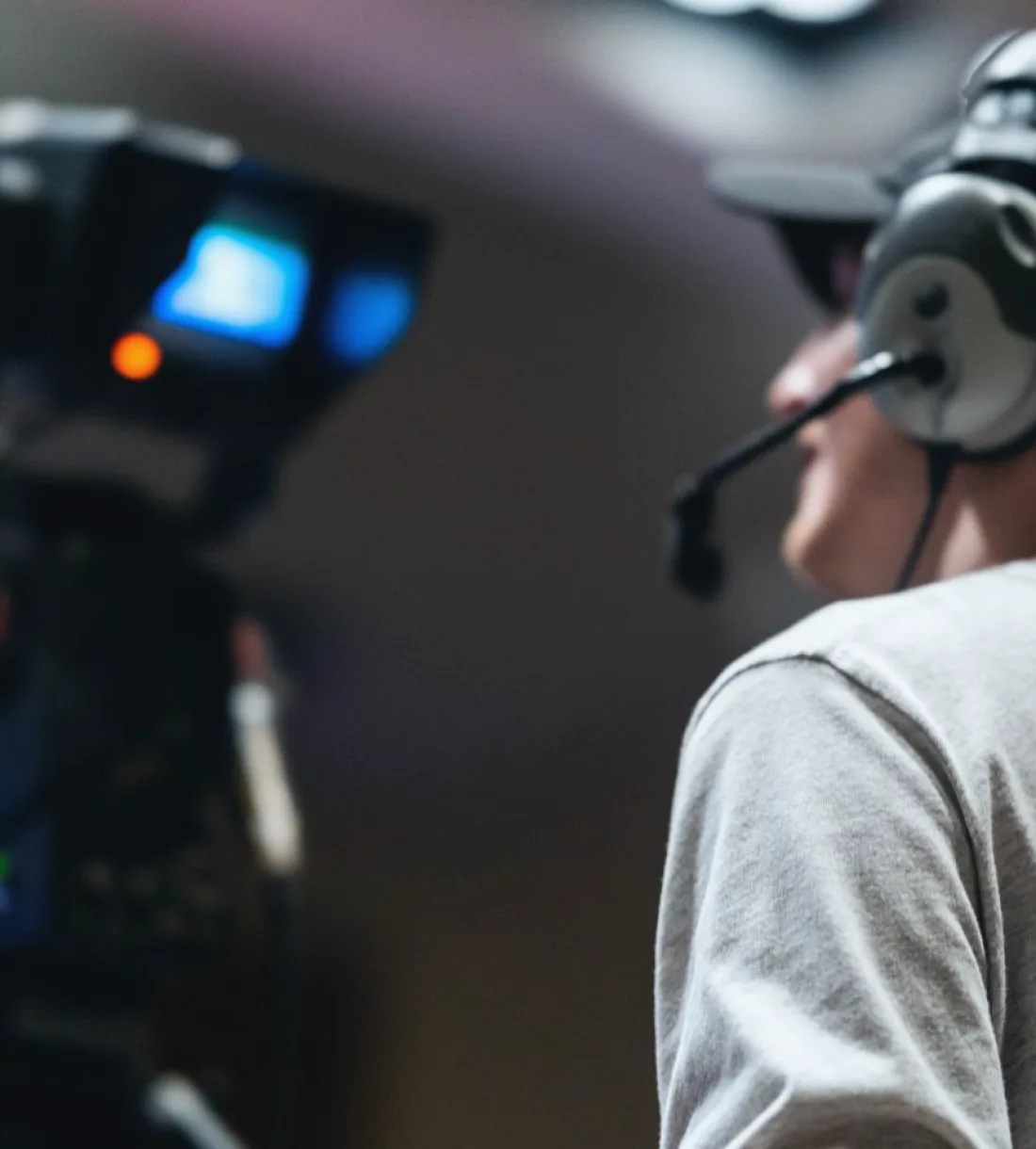
Intercom is the tool I think about most, because it is the only channel that works when everything else is moving. Before a show we write down who is on which talkback group, who can speak to the presenter's earpiece, and who is only listening. A short list pinned inside the gallery prevents the most common muddle, which is two people giving the same instruction in different words.
We keep spoken language short and agreed in advance. A cue is a number and a word, not a sentence, and the director is the only voice that calls shots. If a crew member has a problem they use a fixed phrase that means they need attention without starting a conversation in everybody's ears.
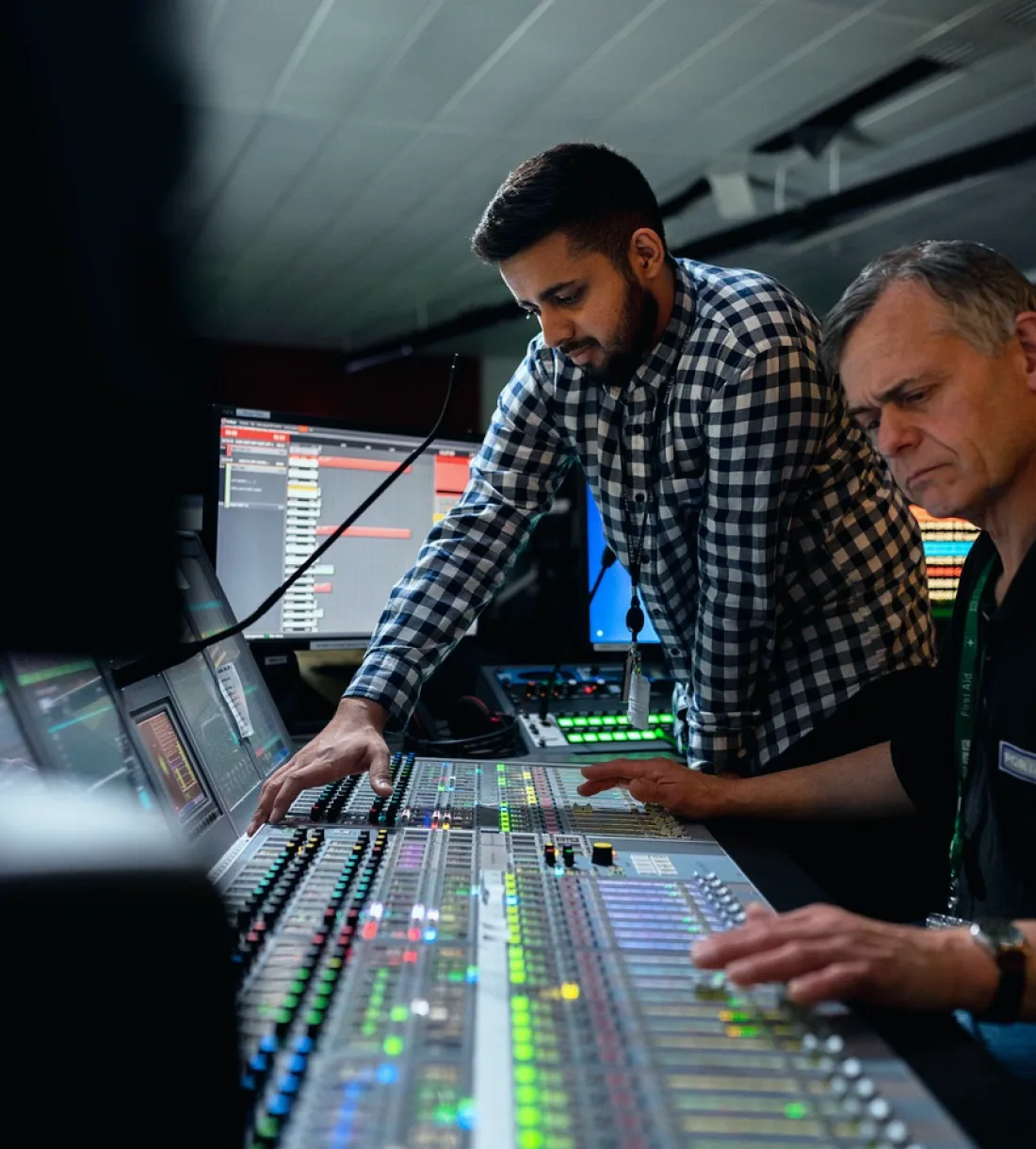
The same discipline applies to the audio feeds themselves. We label every return, every foldback and every programme feed in plain words on the desk, using tape and a marker. It is not elegant, but a label that a stranger can read is worth more than a neat scene name in software.
Named talkback groups, written down
Short cue words agreed before the show
Plain labels on every feed and return
Backup plans written as actions, not hopes
A backup plan is only useful if it says what a named person does when a named thing fails. We list the likely failures for each show: a radio microphone dropping out, a camera losing its feed, a laptop playing graphics freezing, a power circuit tripping. Beside each one goes the action, the person who takes it, and the point at which we stop trying to fix it and switch to the alternative.
That last point is the difficult part. Engineers like to fix things, and a live show does not wait. We agree a limit, often as short as ten seconds for audio, after which the spare microphone goes up or the director cuts away. Having agreed it in a quiet room, nobody argues about it in the gallery.
We carry duplicates of the small items that cause the most trouble: cables, batteries, adaptors, a spare handheld microphone. None of this is glamorous, but a box of known-good spares has rescued more broadcasts than any single piece of expensive equipment.
Each likely failure paired with an action and an owner
A time limit before switching to the alternative
Spares for cables, batteries and microphones
Keeping the documents alive during the day
Paper that is correct at nine o'clock is often wrong by four. Running orders change, guests arrive late, a segment is shortened. We nominate one person to own the master run sheet and to issue each new version with its number, and everyone else works from the latest printout and throws the old one away.
I find that a few simple habits keep this honest. Changes are announced aloud as well as written. The version number is read out at the start of each rehearsal. Anything agreed in conversation but not on the sheet is treated as not agreed, which sounds strict but spares a great deal of confusion later.
We use software where it truly helps, mostly for timing and sharing files, but the final authority is always the printed sheet in the gallery. If the network drops or a screen fails, the document still works, and that dependability is the whole reason we trust it.
After the show: a short, honest review
When the broadcast ends and the equipment is packed, we sit down for a short review while memories are fresh. We go through the run sheet line by line and mark where the plan held and where it did not. Nobody is blamed, and the aim is only to learn which assumption was wrong.
Those notes feed straight into the next plan. A cue that was always late gets more warning, a segment that always overran gets a shorter slot, and a failure that nearly happened gets a line in the backup list. Over a number of shows the documents become shorter and sharper rather than longer.
It is an unremarkable habit, but it is where most of our improvement has come from. Equipment changes every few years, yet a team that reviews honestly and writes things down tends to get steadier regardless of what is in the rack.
Good workflow planning is mostly ordinary paper, agreed habits and a calm review afterwards. A clear run sheet, a realistic rehearsal plan, a labelled talkback list and backup actions with named owners do more for a live show than any single clever tool. If you are preparing a broadcast and want to talk through your own running order, we are glad to look at it with you.
Callum Reid explains how flairuni plans vision mixers, routing, monitoring and intercom as one control room, and what clients can expect from an integration project this autumn.
Callum Reid sets out the questions worth answering about your room, your microphones and your mix before settling on an acoustic and audio plan for live television.
Most lighting trouble on a live programme starts in planning, not on the night. Here are the mistakes we meet most often on studio sets and stages, and the habits that prevent them.
flairuni plans and runs live television production from Inverness: studio integration, cameras, sound and lighting for news, interviews, concerts and festival stages.